

January Business Pressure Starts with December's Decisions
January pressure doesn’t come out of nowhere. Most of the time, it’s already been paid for quietly in December.
Just like people spend more in December, businesses do too.
Not recklessly. Not irresponsibly. Often intentionally.
Client gifts go out. Holiday bonuses are paid.
Promotions or goodwill discounts are offered.
Work weeks shorten and decisions get pushed because “we’ll deal with it in January.”
None of this is bad. But it all costs something.
And most businesses don’t stop to account for that cost before the calendar turns.
January doesn’t create business pressure.
It reveals what the business has already been carrying.
Why January Pressure Is Structural, Not Emotional
Here’s the part most Founders miss. If your business is registered, it isn’t just an extension of you.
Legally and financially, it’s its own entity.
It earns. It spends. It carries obligations.
When December decisions stretch the business financially or operationally, January is when the strain shows up first.
Not emotionally. Structurally.
Most creative businesses don’t need a mindset shift.
They need a system that stops putting them in impossible positions.
Why January Is Not a Clean Slate
January feels like a reset, but it isn’t.
By the time the year changes:
-
Commitments are already made
-
Scope has already expanded
-
Capacity is already spoken for
-
Costs are already embedded
Time doesn’t fix structure. And delayed decisions don’t pause their impact.
They just arrive later, with less flexibility and more consequences.
That’s why January pressure often hits harder at creative businesses that were “doing fine” in December.
If a business only feels strained when cash flow slows, the system was already stretched when things were busy.
Busyness masked the gaps. Slower periods expose them.
What January Is Actually Showing You
January isn’t asking you to work harder. It isn’t asking for discipline. And it isn’t asking for motivation.
It’s asking for Clarity.
Clarity about:
-
What your pricing actually covers
-
What delivery really costs
-
What you’ve been absorbing quietly
-
Where there’s no buffer for delays, rework, or breakdowns
When pricing doesn’t cover reality, pressure doesn’t disappear.
It just gets deferred.
Why December Still Matters
That said, December isn’t only where pressure builds.
It’s also one of the few moments in the year when you can see the full picture without everything demanding an immediate fix.
It’s a natural checkpoint. Not for guilt or regret. But for accuracy.
- What held up this year?
- What quietly strained the business?
- What worked, and what only worked because you carried the weight?
If the business made it through the year, something worked.
But if it only worked because you carried the gaps, that matters.
January collects what December sets up.
December gives you distance. January removes it.
The businesses that feel less pressure in January aren’t the ones that worked harder in December.
They’re the ones who use December to assess what the business can actually support, and what needs correction before the calendar turns.
Why This Matters Before the Year Ends
If your pricing doesn’t cover your business reality, January will expose it.
Pressure will decide for you if you do not.
The Profit Risk Assessment identifies the structural signals that are quietly building pressure in your business right now — so you know exactly where to focus before the cost compounds further.
Clarity now costs less than correction later.
About the Author
Temi is a Fractional COO and Profit Architect at Creative Profit Solutions. She helps founder-led businesses experiencing financial pressure, operational chaos, margin erosion, and constant firefighting stabilize their pricing and delivery systems. Her work closes the gap between Financial Intent (what a business bills) and Operational Reality (the cash it actually keeps), so founders stop subsidizing delivery with unpaid time and personal cash.
Recent Articles:

How Do I Know If a Project Made Money?
A paid invoice proves the client paid but doesn’t prove the project made money. Here is what the usual checks miss, and where a fully paid project quietly bleeds cash.
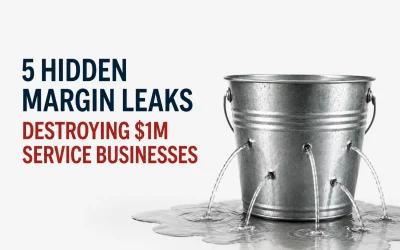
5 Hidden Margin Leaks Destroying $1M Service Businesses
Many service businesses hit $1M in revenue only to discover cash flow remains tight, delivery pressure keeps increasing, and the founder is still absorbing operational gaps personally. This article breaks down the five hidden margin leaks quietly destroying profitability during execution.

Why Does My Business Feel Harder As It Grows?
The business is growing. So why does it feel harder to run?
More clients. More revenue. More team. And somehow, more of everything still routes back to you.
Growth was supposed to create leverage. Instead it created pressure.
This article breaks down why that happens and what needs to change before scaling makes it worse.
