
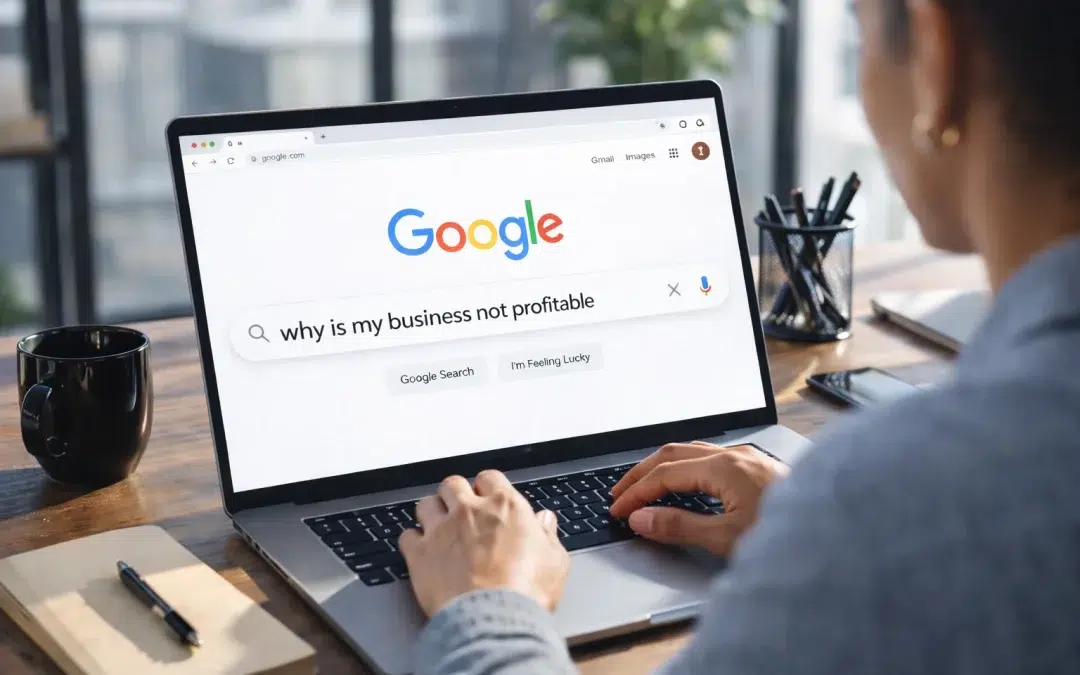
Why Is My Business Not Profitable? Here Is What Is Actually Causing It
This is the first article in the Search Decoded Series: What founders search and what those questions actually mean.
Most founders who search "why is my business not profitable" are thinking something simple:
“We’re making money… so why don’t I feel it?”
Money is coming in.
Projects are getting done.
But at the end of the month, it still feels tighter than it should.
That is the signal.
CPS Reality Check
If your business is busy but still feels financially tight,
the work is costing more to deliver than you think.
Where Profit Is Actually Going
Every project runs on two numbers:
- What you charged
- What it actually cost to deliver
Profit only exists if the second number stays below the first.
For most businesses asking "why is my business not profitable", that is not what is happening.
Once delivery begins:
- Projects take longer than expected
- Overhead keeps running while work slows
- Extra work gets absorbed to keep things moving
None of that is priced.
All of it is paid.
This is where profit starts getting absorbed during delivery.
That is where the profit went.
What You Are Not Seeing
Most of this loss is not visible.
There is no line item for:
- Work that ran longer than planned
- Overhead that continued while delivery slowed
- Time you stepped in to keep things moving
But you feel it because you know the business should be doing better than it is.
CPS Insight
If you're stepping in to get projects over the line,
but that time isn't costed into the work,
that is owner subsidy.
Why Nothing Has Fixed It
You have likely already tried to solve this by:
- Raising prices.
- Taking on more work.
- Cutting costs.
But the pressure comes back because the problem was never at the surface.
The work still costs more to deliver than you planned.
So when you raise prices, the same gap absorbs the difference.
When you take on more work, more projects run through the same problem.
This is what happens when more volume is pushed through a broken delivery system.
CPS Insight
The number changed.
The structure did not.
What Changes When You See It Clearly
Once you know what it actually costs to deliver your work, decisions change.
You can see:
- Which projects are actually profitable
- Where profit is being absorbed
- What needs to change
Pricing stops being a guess and becomes anchored to reality.
And more importantly, profit stops disappearing.
Until then, it is assumed.
Where To Start
Look at your last three projects.
Do you know what each one actually cost to deliver?
Including:
- Your time
- Overhead during delivery
- Extra work that was never invoiced
If you do not know that number, profit is not being managed.
It is being left to chance.
What To Do Next
If you searched "why is my business not profitable", your business is already showing signs of profit breakdown.
The question is not whether money is coming in. It is whether you are keeping it.
The Profit Risk Assessment shows where that breakdown is happening in less than 5 minutes.
Next in the Search Decoded Series:
FAQs
Why is my business not profitable even when money is coming in?
Because revenue and profit are not the same number. Revenue records what was invoiced. Profit is what remains after the real cost of delivery has been paid. When pricing does not carry the full cost of delivery — direct costs, overhead, your own time, and a target profit — the gap gets absorbed quietly on every project delivered.
What does it mean when profit gets absorbed during delivery?
It means the real cost of delivering a project — the extra hours, the overhead that kept running, the work absorbed personally — exceeded what was priced. None of that extra cost was invoiced. All of it was paid out of the profit that was expected when the project was quoted.
Why does raising prices not fix the profitability problem?
Because the problem is not the price number. It is what the price is being asked to carry. A higher price absorbs the same delivery costs as a lower one if the delivery structure has not changed. The number changes. The gap does not.
What is Owner Subsidy and how does it affect profit?
Owner Subsidy happens when the founder steps in to keep work moving — absorbing time, decisions, and effort that were never costed into the project. That time has a real cost. When it is not priced in, the founder is personally funding the gap between what the project was quoted to cost and what it actually cost to deliver.
How do I know what my projects are actually costing to deliver?
Start with your last three completed projects. Calculate the total time spent — your own and your team's — at a real hourly rate. Add the overhead that ran during the project duration. Add any work absorbed that was never invoiced. Compare that total to what you charged. The gap between those two numbers is where your profit went.
Why does taking on more work not fix the profit problem?
Because more work runs through the same delivery structure. If the real cost of delivering each project exceeds what was charged, every additional project adds more absorbed cost without adding proportionate profit. Volume compensates temporarily. The gap widens as the business grows.
About the Author
Temi is a Fractional COO and Profit Architect who works with owner-led service and project-based businesses where revenue is consistent but profit never reaches the bank. Her work identifies the structural gaps between what a business bills and what it actually keeps, and builds the operational systems that close them. She founded Creative Profit Solutions after a decade running manufacturing operations and applying Big Four accounting discipline to the delivery economics of founder-led businesses.
Work with Temi → Get in touch
Recent Articles
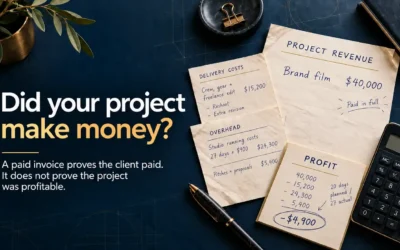
How Do I Know If a Project Made Money?
A paid invoice proves the client paid but doesn’t prove the project made money. Here is what the usual checks miss, and where a fully paid project quietly bleeds cash.
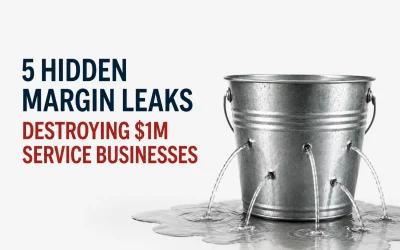
5 Hidden Margin Leaks Destroying $1M Service Businesses
Many service businesses hit $1M in revenue only to discover cash flow remains tight, delivery pressure keeps increasing, and the founder is still absorbing operational gaps personally. This article breaks down the five hidden margin leaks quietly destroying profitability during execution.

Why Does My Business Feel Harder As It Grows?
The business is growing. So why does it feel harder to run?
More clients. More revenue. More team. And somehow, more of everything still routes back to you.
Growth was supposed to create leverage. Instead it created pressure.
This article breaks down why that happens and what needs to change before scaling makes it worse.
